Productive Soils: Rural urbanization and the transformation of unbuilt space in Angermünde
Format: Design Studio // Habitat Unit, TU Berlin
Teaching team: Juliana Canedo, Christian Haid, Anke Hagemann
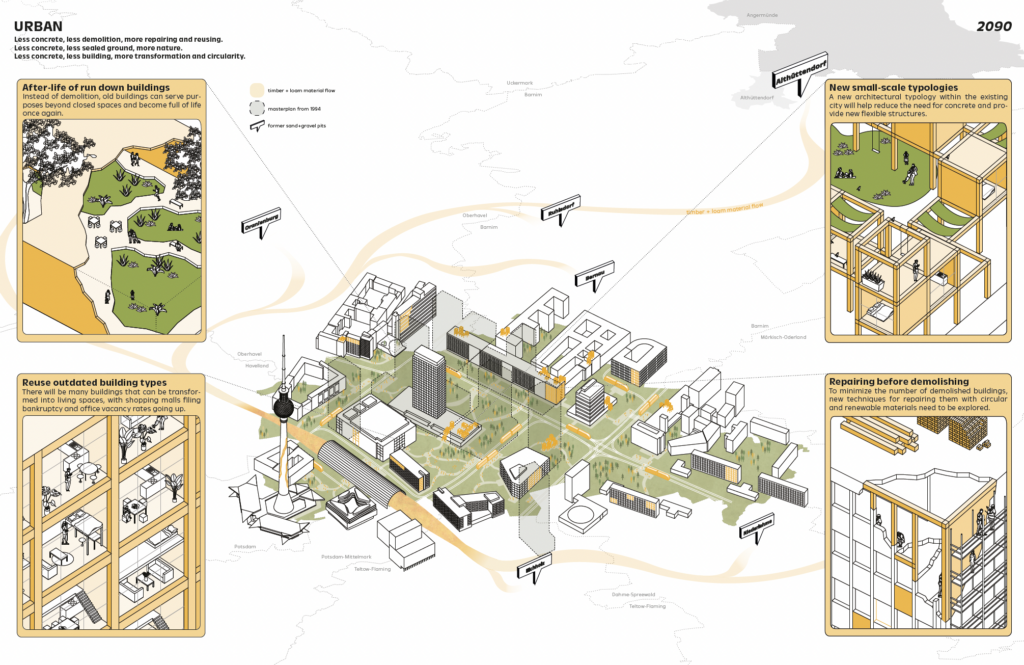
The Master Studio offered in the Winter Semester 2023 at TU Berlin critically engages with the overlooked spatial dynamics of rural and sparsely populated areas in the context of extended urbanization. While contemporary discourse often centers on cities as primary sites of innovation and transformation, the studio highlights how rural landscapes—particularly those surrounding metropolitan regions—play a fundamental role in sustaining urban life. Productive soils, understood both as material resources and spatial infrastructures, are essential for the provision of food, energy, building materials, and recreational spaces. As such, they are central to ongoing transitions in construction, food systems, and energy production. At the same time, these landscapes are increasingly under pressure from industrial agriculture and forestry, resource extraction, soil degradation, ecological crises, and the accelerating impacts of climate change.
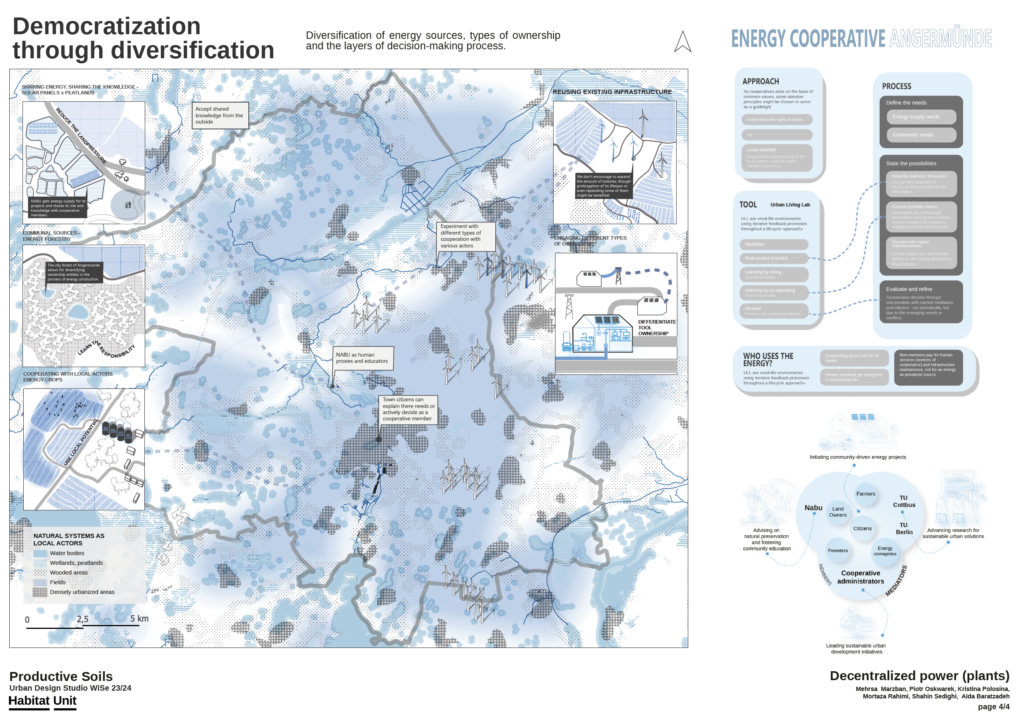
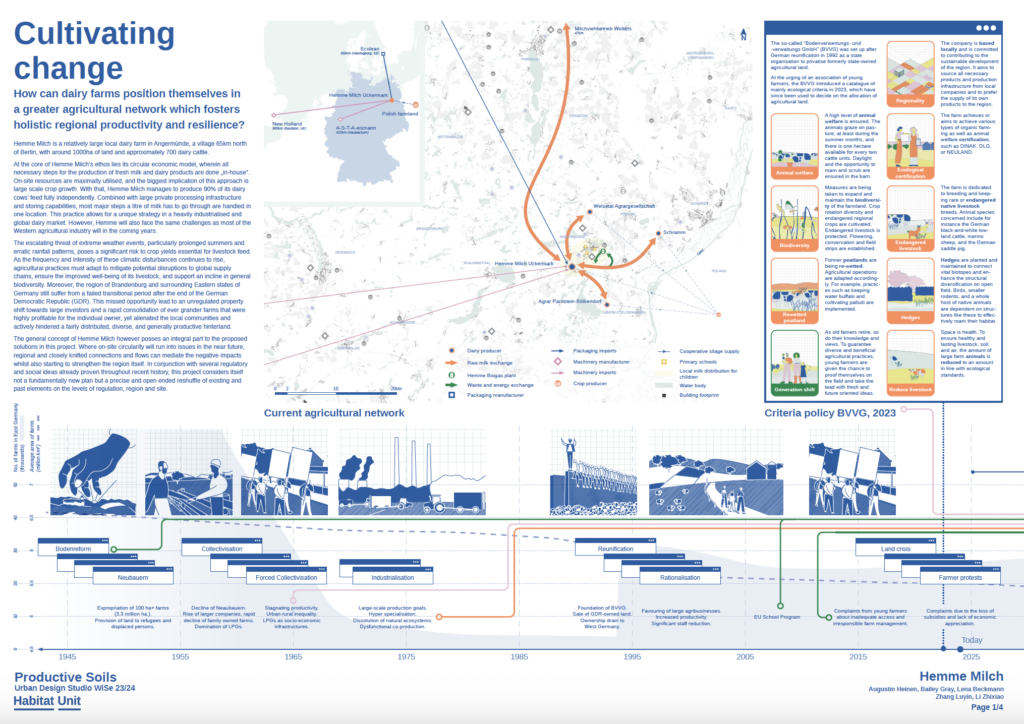
Against this backdrop, the studio investigates the socio-spatial transformations of Berlin’s hinterland, focusing on the region around Angermünde in Brandenburg as a case study. This territory serves as a key site within broader rural-to-urban material flows that are typically organized in a largely unidirectional manner, supplying metropolitan areas with essential resources while often neglecting the ecological and social consequences at the source. By analyzing existing land-use patterns, infrastructures, and resource flows, the studio seeks to uncover the underlying systems that shape these relationships and to question their sustainability and spatial justice.
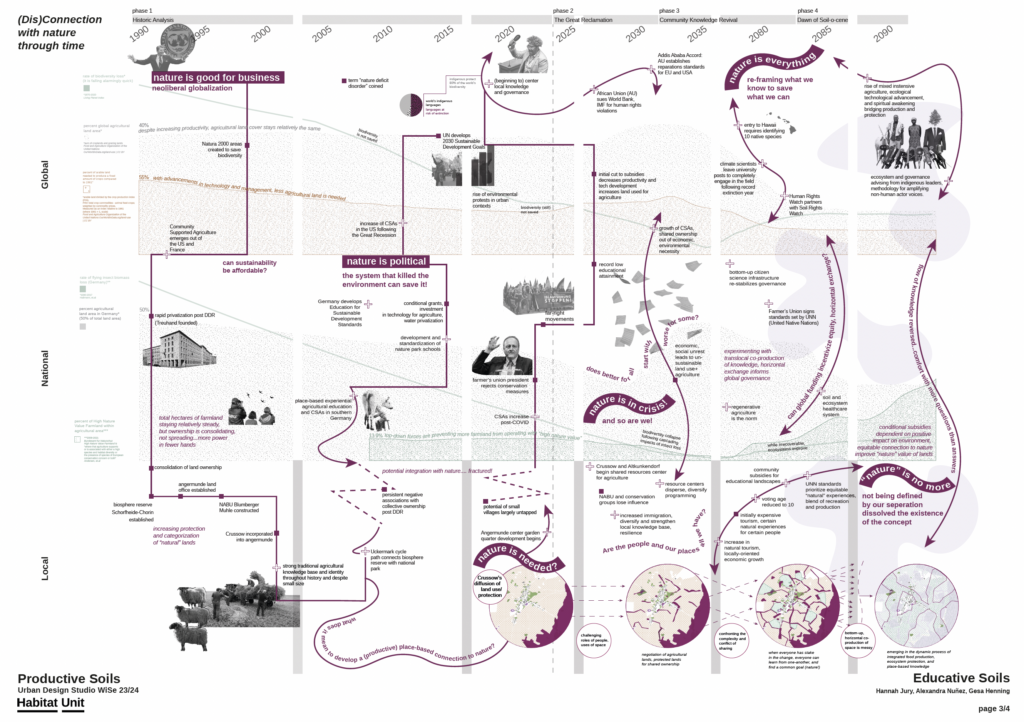
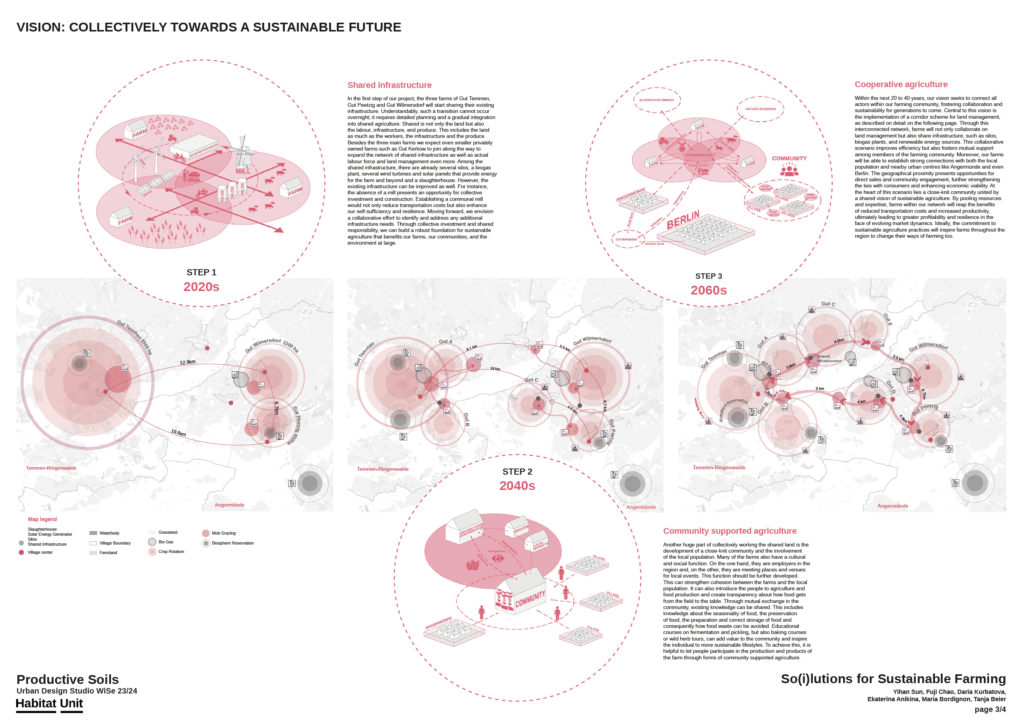
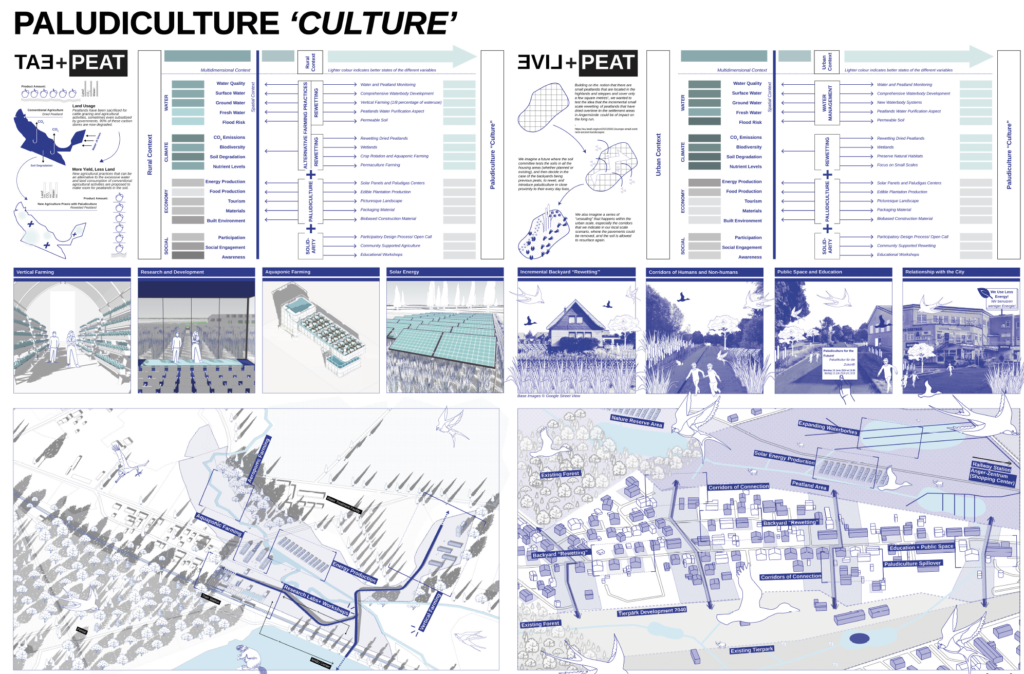
Building on this analytical foundation, the studio explores alternative approaches to the production and distribution of food, energy, and construction materials, aiming to reimagine these systems through more regional, circular, and equitable models. It encourages students to think beyond conventional urban design boundaries by addressing the interdependencies between urban and rural environments and by envisioning new configurations of actor networks, governance structures, and spatial arrangements. In doing so, the studio positions urban design as a tool not only for interpreting complex territorial systems but also for actively contributing to their transformation.
Through a combination of research, mapping, and design exploration, students engage with the challenges and potentials of productive landscapes, considering how agriculture, forestry, human recreation, and more-than-human habitats can coexist within a framework of sustainable development. The studio places particular emphasis on the future of rural soil landscapes as dynamic environments shaped by ecological processes, economic practices, and social relations, and it invites participants to propose strategies that balance productivity with environmental stewardship and resilience. The studio is developed in close cooperation with the think tank Bauhaus Earth, the City of Angermünde, and a range of local stakeholders and initiatives, ensuring that the work is grounded in real-world contexts and informed by diverse perspectives. This collaborative framework allows students to engage directly with ongoing debates and practices, fostering a deeper understanding of the complexities involved in transitioning toward more sustainable territorial systems. Ultimately, the studio aims to expand the scope of urban design by addressing the critical role of rural environments in shaping future living conditions and by contributing to more integrated, just, and ecologically responsive forms of spatial development.