COLLOC – Collaborative Production of Transformation Knowledge in Self-Organized Occupations
Format: Workshop Series // TU Berlin, BTU Cottbus and UFRJ
Teaching team: Juliana Canedo, Kathrin Wieck, Natacha Quintero, Toni Karge, Fernanda Petrus, Manuel Meyer, Ana Slade, Jorge Fleury
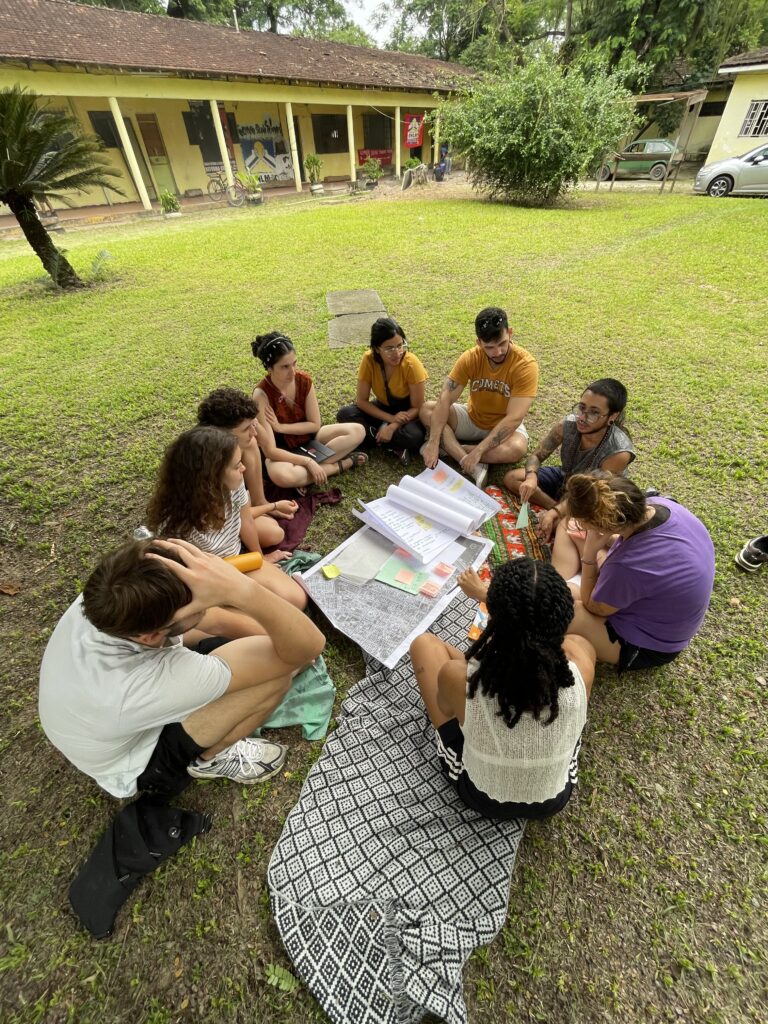
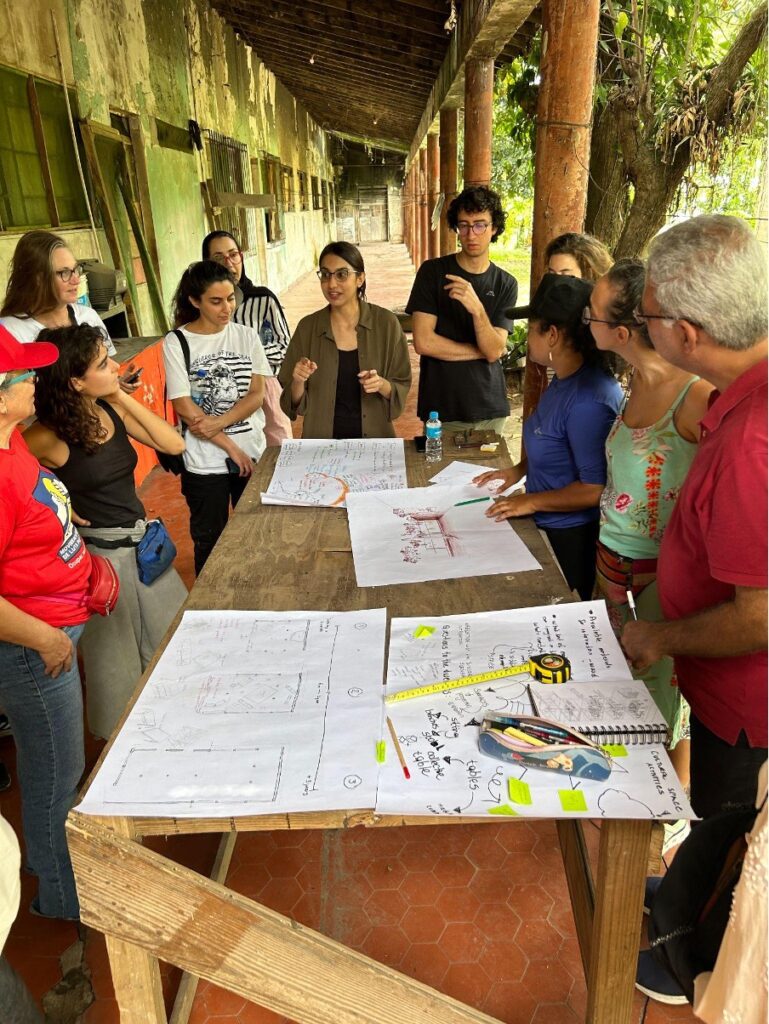
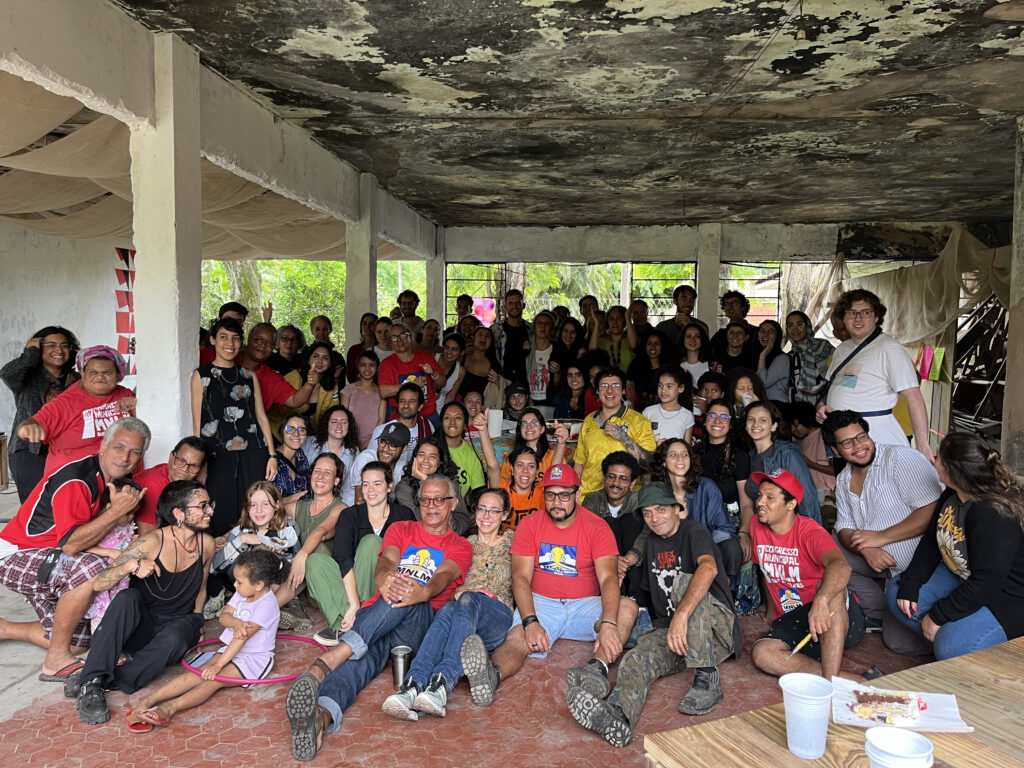
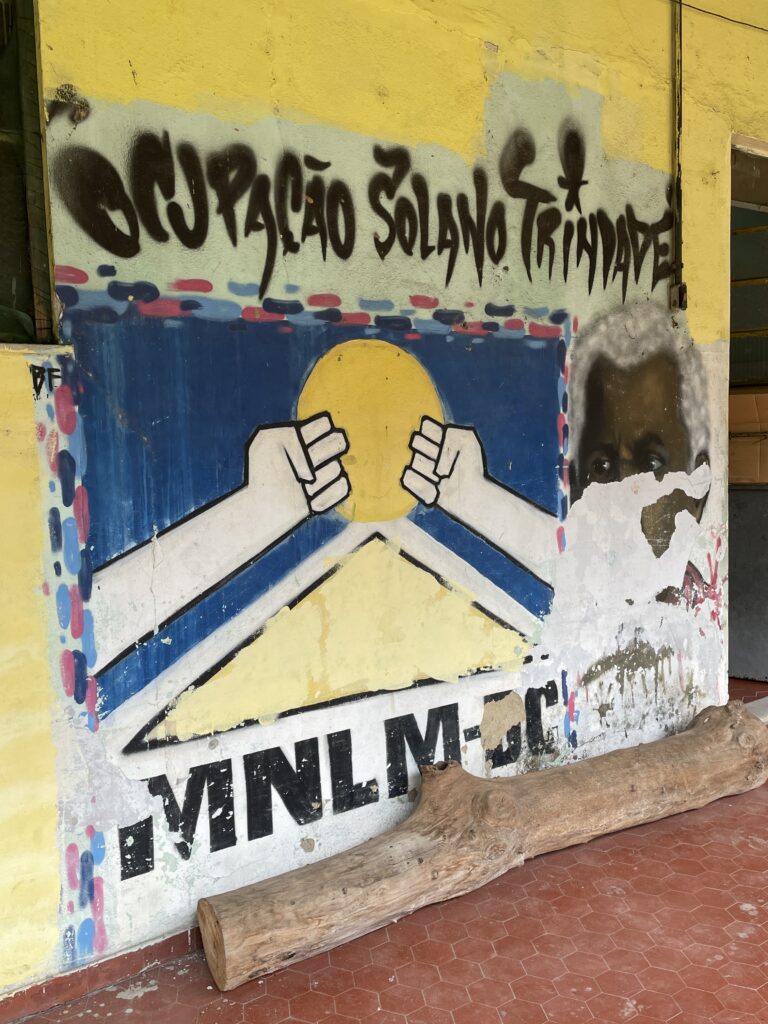
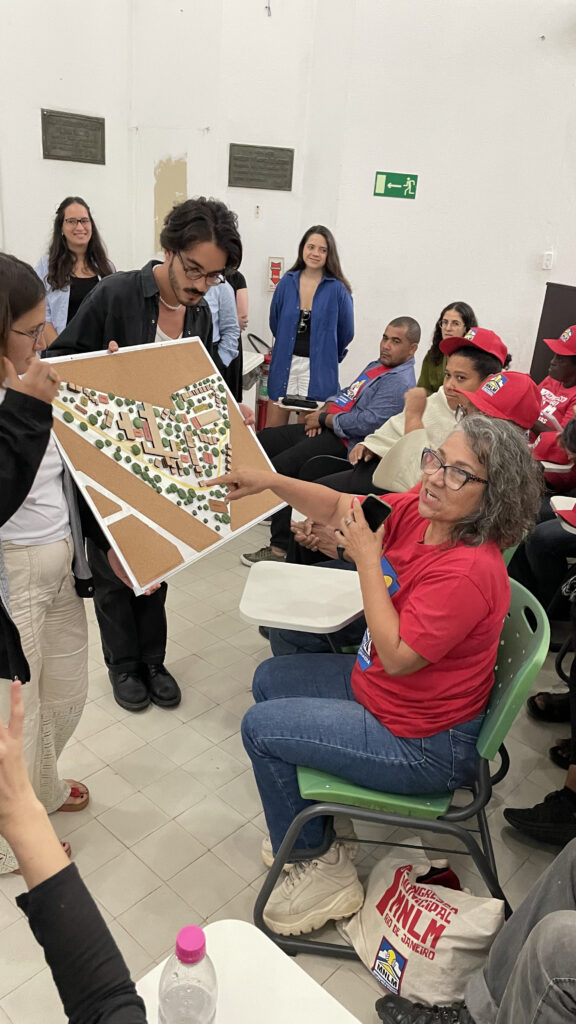
“COLLOC” is a workshop series aiming to co-produce short and long-term problem solutions for housing, food and water systems and collective open spaces in vulnerable urban spaces. It has been taking place every year since 2018 in and with a self-organized occupation in Brazil and is organized by TU Berlin, Office for Science and Society, the Department of Habitat Unit, the BTU Cottbus-Senftenberg/ Department of Urban Planning and the Universidade Federal do Rio de Janeiro/ Faculty of Architecture and Urbanism. It is supported by the German Academic Exchange Service (DAAD) with funds from the German Federal Ministry for Economic Cooperation and Development (BMZ). One main principle is to collaboratively experiment in a network of actors which includes scientists, students, international alumni from different disciplines, the residents of the self-organized occupation Solano Trindade, activists of the national social movement MNLM, socio-technological initiatives and also non-human actors like the forest, food, soil, a community kitchen.
“COLLOC” stands for “Collaborative Production of Transformation Knowledge in Self-Organized Occupations”. This kind of knowledge is made possible through co-creative designing and working processes that structurally anchors an expansion of transdisciplinary cooperation and research in connection with teaching. Alumni will have the opportunity to learn and share their expertise on a concrete social problem in a local context as they practice, test and reflect on mutual learning, transdisciplinary work with various actors from science and society.
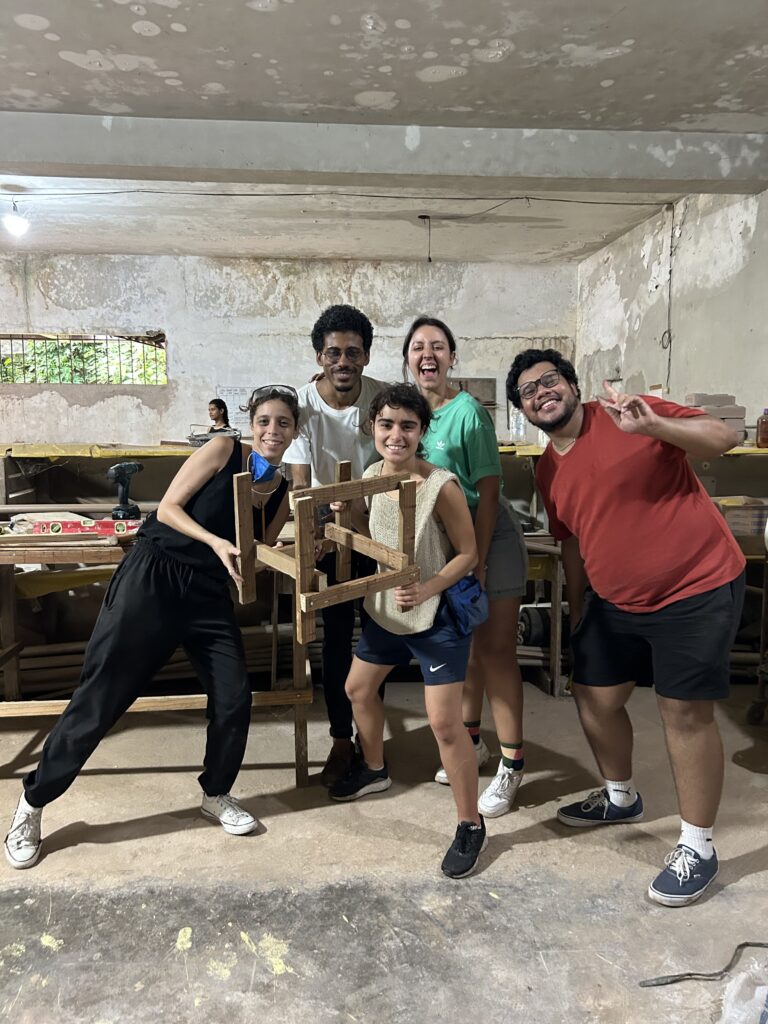
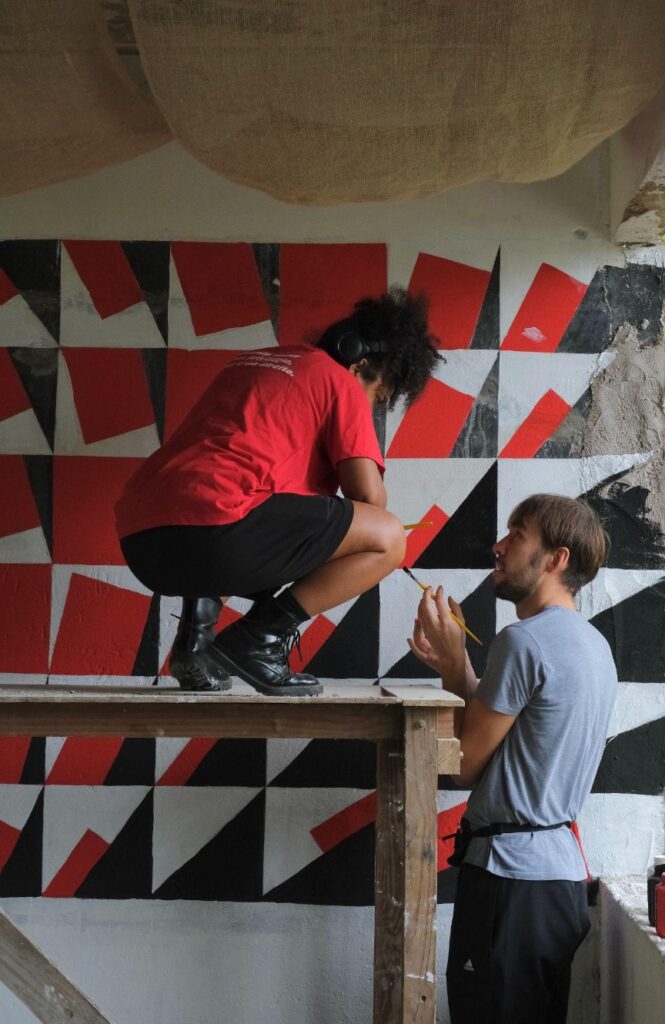
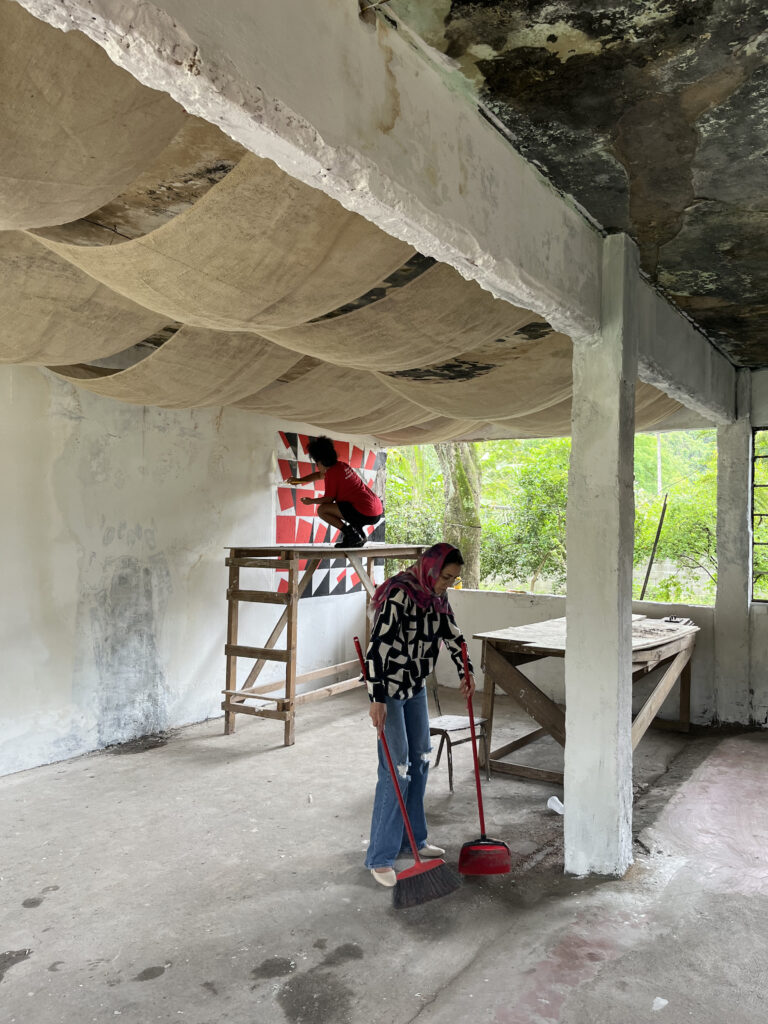
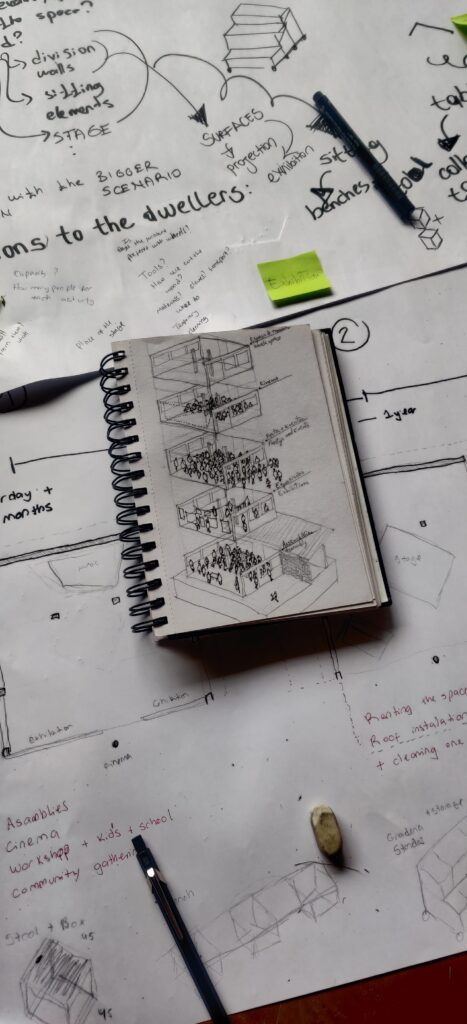
The Alumni Workshop takes place in three phases. The phases are oriented towards the methodology of transdisciplinary research processes with joint understanding of the problem, the co-production of new integrated knowledge and the co-evaluation of impact and transferability. It includes the implementation of continuing education and networking activities of all participants. The umbrella methodology for knowledge integration we developed is the Dual Design Strategy. All participants were asked to design systemic scenarios for a long-term sustainable transformation linked to the co-productive construction of small interventions as short-term problem solutions.
Methodologically, further appropriate tools are generated and used for the three project phases that will enable permanent participation to create a mutual learning environment as well as further training for transdisciplinary research and providing long-term networking activities. The workshop has mainly focused on the self-organized occupation of Solano Trindade in the metropolitan region of Rio de Janeiro, Brazil. By working closely together with community leaders, activists, residents, practitioners, academics, and students, the workshop addressed the need for generating new knowledge by integrating different types of knowledge coming from the various actors and disciplines in order to tackle complex urban development challenges in a more suitable, sustainable and innovative way.
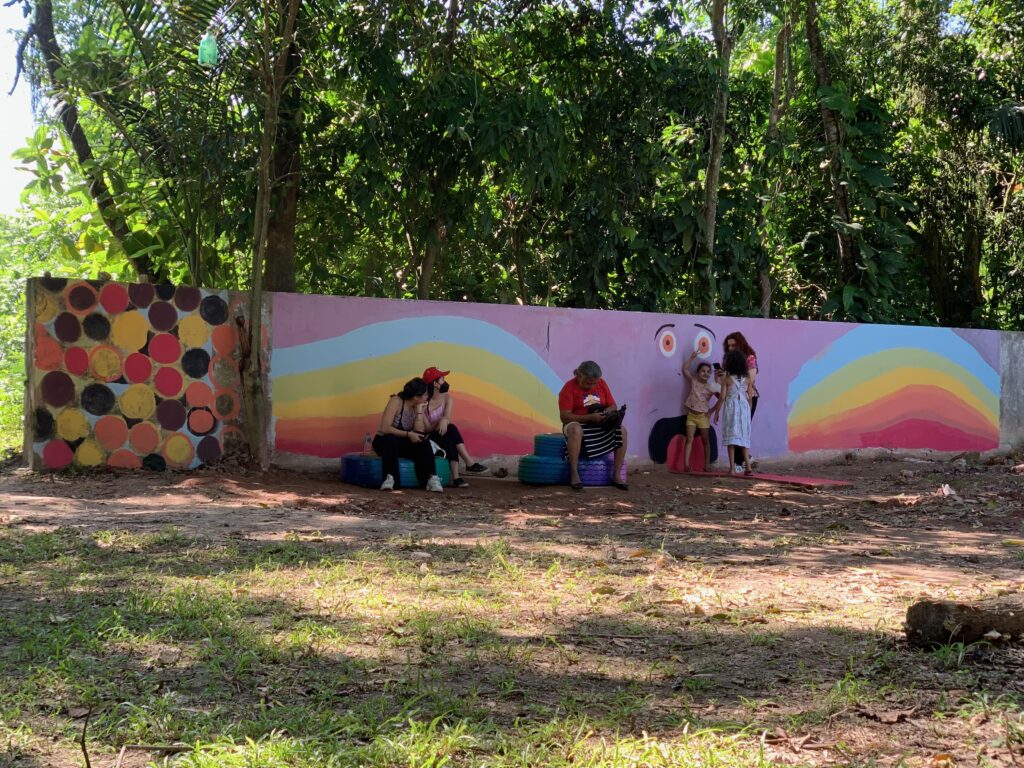
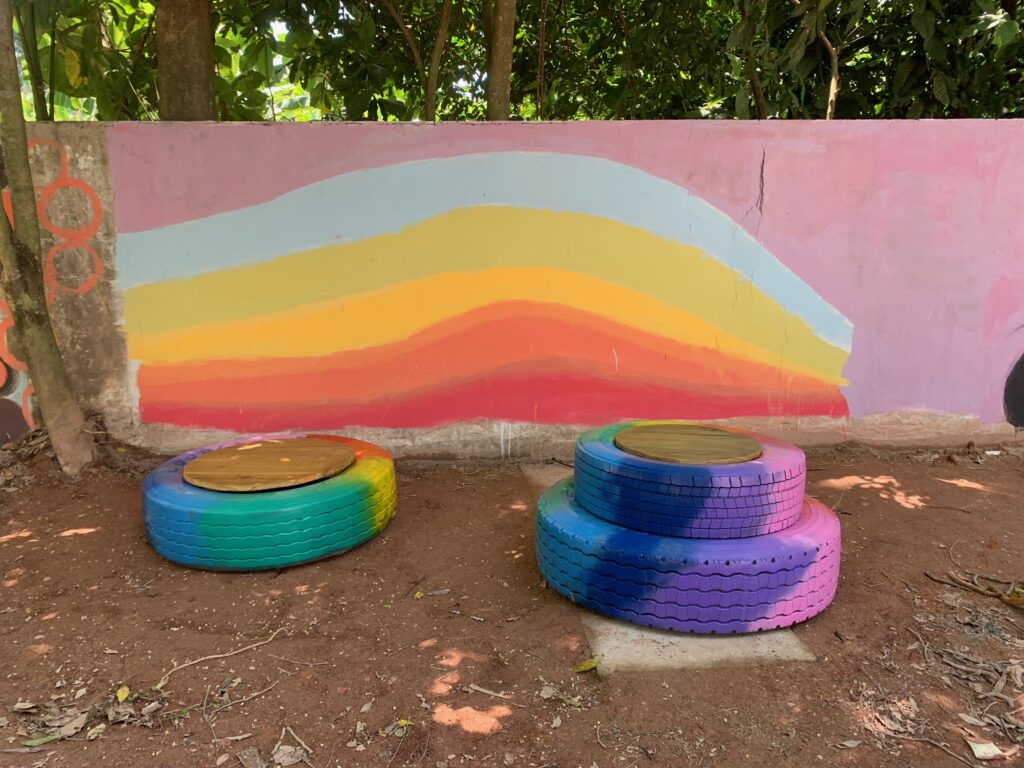
Together, we design context-appropriate interventions and reflect on their impact on the future development of the self-organised occupation of Solano Trindade.
Further info:
COLLOC Website
Video COLLOC 24
Video COLLOC 23
TU Berlin International Affairs Experiences